 This symmetry group is much like the previous
symmetry group p4, since it contains rotations of 90 and 180 degrees,
but it also includes reflections.
This symmetry group is much like the previous
symmetry group p4, since it contains rotations of 90 and 180 degrees,
but it also includes reflections.
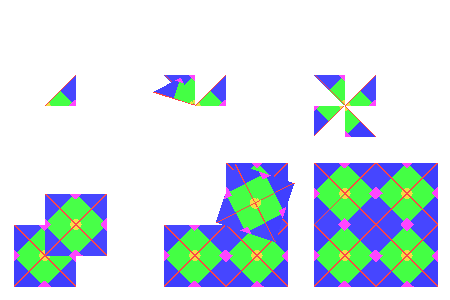
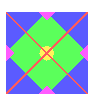
 To make a p4m tiling, begin with the tile shown to the left. The
symmetry consists of reflections across the red line, 90 degree
rotations about the yellow corners and 180 degree rotations about the
purple corners.
To make a p4m tiling, begin with the tile shown to the left. The
symmetry consists of reflections across the red line, 90 degree
rotations about the yellow corners and 180 degree rotations about the
purple corners.
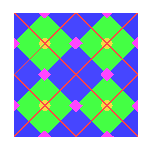 Imagine how the p4 symmetries effect the tiling as a whole. If we
reflect the entire tiling across any of the red lines, then the
reflected tiling matches the original perfectly. Similarly when
rotating 90 or 180 degrees about the yellow or red points,
respectively, the rotated tiling will match the original. So in
addition to having the four- and two-fold rotational
symmetry that p4 tilings have, our tiling also has
reflexive symmetry.
Imagine how the p4 symmetries effect the tiling as a whole. If we
reflect the entire tiling across any of the red lines, then the
reflected tiling matches the original perfectly. Similarly when
rotating 90 or 180 degrees about the yellow or red points,
respectively, the rotated tiling will match the original. So in
addition to having the four- and two-fold rotational
symmetry that p4 tilings have, our tiling also has
reflexive symmetry.
 By looking at it, you can
see p4m tilings are periodic, which is
just the same as saying the tiling is symmetric under translations. If we rotate and reflect our
original tile we can make the sqaure at the right. Then we can
recreate the original p4m tiling by just translating this larger
tile. By looking at it, you can
see p4m tilings are periodic, which is
just the same as saying the tiling is symmetric under translations. If we rotate and reflect our
original tile we can make the sqaure at the right. Then we can
recreate the original p4m tiling by just translating this larger
tile.
Kali denotes this symmetry by "*442". You can go to  now to experiment with symmetry p4m. now to experiment with symmetry p4m.
|