|
The most obvious kind of isometry is called a
translation, and amounts to just pushing an object in a
straight line to a new location:
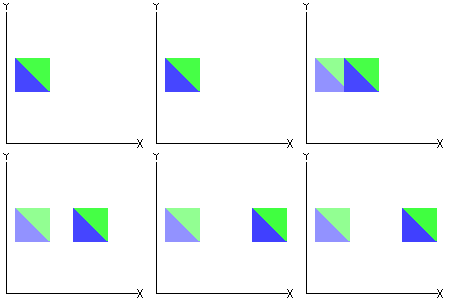
Although translation is obviously a common and useful
transformation, by itself, it isn't all that interesting. However,
since our ultimate goal is to produce a complete list of all available
isometries, there are a couple of things worth noticing.
Probably the most important general property of translation is that
is has no fixed points. Think of the square as being drawn
on a large sheet of clear plastic. To translate the square, you would
slide the whole sheet in the direction of the square's final
destination. When you are done, there is no point on the plastic
sheet directly above where it started. Put another way, every point
on the square, in fact on the whole sheet, moves to a new location as
a result of the translation.
This is not always the case with an isometry, so this is one quick
and easy way to tell different kinds of isometries apart, even when you don't
know much else about them.
|